








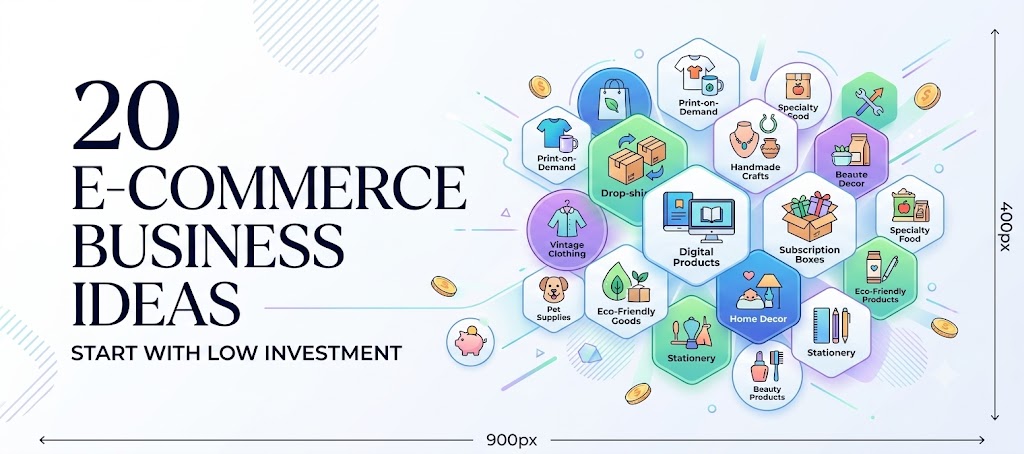
Starting an e-commerce business does not always require a large warehouse, a huge product catalog, or a significant upfront investment.
Today, entrepreneurs can start small, test an idea, understand customer demand, and gradually expand the business. The key is to choose a business model that matches the available budget, skills, time, and target customers.
For entrepreneurs targeting the UAE market, e-commerce can offer opportunities across products, services, niche categories, and specialized online stores. However, low investment does not mean zero investment. Sellers still need to consider product sourcing, marketing, packaging, delivery, platform costs, customer service, and applicable UAE business requirements.
This guide explores 20 e-commerce business ideas that can be started with relatively low initial investment, along with practical considerations for each.
What Does “Low Investment” Mean in E-commerce?
A low-investment e-commerce business generally aims to reduce the amount of money required for:
-
Inventory
-
Storage
-
Physical retail space
-
Equipment
-
Staff
-
Product development
-
Marketing
Some models allow entrepreneurs to start with a small inventory, while others use pre-orders, made-to-order products, digital products, or third-party fulfillment.
The right option depends on the entrepreneur's skills and business goals.
1. Personalized Gift Store
Personalized gifts can appeal to customers looking for something more meaningful than standard products.
Examples include:
-
Customized mugs
-
Name plates
-
Personalized notebooks
-
Photo gifts
-
Customized accessories
-
Engraved products
Instead of keeping large quantities of customized products in stock, entrepreneurs can work with suppliers or production partners and create products after receiving orders.
Why It Can Work
Customers often purchase personalized products for:
-
Birthdays
-
Weddings
-
Anniversaries
-
Corporate events
-
Festivals
-
Special occasions
The business can start with a small product range and expand based on customer demand.
2. Niche Fashion Accessories Store
Instead of starting a large fashion business, entrepreneurs can focus on one specific category.
Examples include:
-
Bags
-
Wallets
-
Hair accessories
-
Sunglasses
-
Fashion jewelry
-
Scarves
-
Travel accessories
A focused catalog can make it easier to develop a clear brand identity.
The key is selecting a specific customer segment rather than trying to sell everything to everyone.
3. Home Organization Products
Home organization has opportunities across products such as:
-
Storage boxes
-
Drawer organizers
-
Kitchen organizers
-
Closet accessories
-
Desk organizers
-
Cable management products
A seller can create themed collections, such as:
Kitchen Organization
Bedroom Storage
Home Office Organization
This makes it easier to build bundles and encourage multiple-item purchases.
4. Pet Accessories Store
Pet owners often purchase products beyond basic food and supplies.
An online store could specialize in:
-
Pet collars
-
Toys
-
Beds
-
Grooming accessories
-
Feeding accessories
-
Travel products
-
Pet clothing
A niche pet store can build its identity around a particular type of customer or pet category.
Before selling any regulated or specialized pet products, entrepreneurs should check the applicable UAE requirements.
5. Phone and Device Accessories
Technology accessories can be attractive for entrepreneurs because many products are relatively small and easy to store.
Examples include:
-
Phone cases
-
Cable organizers
-
Laptop sleeves
-
Stands
-
Screen accessories
-
Desk accessories
-
Charging accessories
Competition can be strong, so sellers should focus on product quality, useful designs, clear specifications, and reliable customer service.
6. Sustainable and Reusable Products
Consumers interested in reducing disposable product use may look for reusable alternatives.
Potential products include:
-
Reusable shopping bags
-
Storage products
-
Reusable bottles
-
Reusable food containers
-
Sustainable household accessories
A business in this category should avoid making environmental claims that cannot be substantiated.
Clear product information can help customers understand exactly what they are purchasing.
7. Stationery and Study Products
Stationery can be a relatively accessible category for online sellers.
Ideas include:
-
Notebooks
-
Planners
-
Journals
-
Pens
-
Desk organizers
-
Study accessories
-
School supplies
The business can differentiate itself through themes, bundles, personalization, or carefully selected collections.
For example, a seller could create:
Student Study Kits
Home Office Kits
Planner Collections
8. Hobby and Craft Supplies
Hobbyists often look for specialized products that may not be available in every local store.
Potential categories include:
-
Art supplies
-
DIY materials
-
Craft tools
-
Painting accessories
-
Scrapbooking products
-
Sewing accessories
A specialized store can build credibility by publishing tutorials, guides, and educational content alongside product listings.
9. Customized Corporate Gifts
Corporate gifting can be an interesting B2B e-commerce opportunity.
Products can include:
-
Customized notebooks
-
Branded stationery
-
Gift boxes
-
Desk accessories
-
Event merchandise
-
Personalized corporate items
Instead of targeting individual consumers, the business can focus on companies, events, conferences, and employee gifting requirements.
This model may involve larger orders but requires strong attention to quality, deadlines, customization, and communication.
10. Kitchen and Cooking Accessories
A specialized online kitchen store can focus on practical products rather than trying to sell every household item.
Examples include:
-
Storage containers
-
Kitchen organizers
-
Cooking accessories
-
Baking tools
-
Serving accessories
-
Cleaning tools
Product demonstrations can be particularly useful in this category.
Short videos and educational content can show customers how products are used.
11. Travel Accessories Store
Travel-related accessories can be sold through a focused online store.
Potential products include:
-
Travel organizers
-
Packing cubes
-
Luggage accessories
-
Passport holders
-
Travel pouches
-
Cable organizers
-
Toiletry organizers
A seller can create product bundles such as:
Weekend Travel Kit
Business Travel Kit
Family Travel Organizer Set
Bundling related products can increase convenience for customers.
12. Car Accessories Store
A niche online store can focus on practical car accessories.
Examples include:
-
Car organizers
-
Cleaning accessories
-
Phone holders
-
Storage solutions
-
Sunshades
-
Interior accessories
Product compatibility should be explained carefully.
If a product works only with certain vehicle models, the listing should clearly state those requirements.
13. Digital Products Store
Digital products can be attractive because they do not require physical inventory or shipping.
Examples include:
-
Templates
-
Planners
-
E-books
-
Design resources
-
Business documents
-
Educational materials
-
Printable products
The main investment is usually time, expertise, design, and marketing rather than physical inventory.
Entrepreneurs should ensure that they own or have the appropriate rights to any content, fonts, images, or resources included in their products.
14. Online Courses and Educational Products
People with specialized knowledge can turn that expertise into digital products.
Potential subjects include:
-
Design
-
Marketing
-
Business skills
-
Language learning
-
Software skills
-
Professional development
-
Creative skills
An entrepreneur can start with a small course or focused workshop rather than building a large educational platform.
The strongest advantage in this model is usually expertise and useful content.
15. Print-on-Demand Products
Print-on-demand allows entrepreneurs to sell customized designs without maintaining large amounts of physical inventory.
Products may include:
-
T-shirts
-
Mugs
-
Posters
-
Tote bags
-
Notebooks
-
Phone cases
When a customer places an order, the product can be produced and fulfilled through a print-on-demand partner.
This can reduce inventory risk, although margins, production quality, shipping times, and supplier reliability still need careful evaluation.
16. Niche Beauty and Personal-Care Accessories
Instead of manufacturing cosmetics, entrepreneurs can focus on accessories and non-regulated products within the broader beauty category.
Examples may include:
-
Makeup organizers
-
Cosmetic bags
-
Hair accessories
-
Beauty storage products
-
Travel beauty organizers
Products involving cosmetics, personal-care formulations, or other regulated categories may be subject to specific UAE requirements, so sellers should verify applicable rules before launching.
17. Subscription Boxes
Subscription businesses provide customers with regularly delivered collections.
Possible niches include:
-
Stationery
-
Hobby products
-
Lifestyle accessories
-
Pet accessories
-
Specialty gifts
-
Themed products
The challenge is maintaining customer value month after month.
Successful subscription businesses need careful product planning, inventory management, packaging, and retention strategies.
18. Handmade Products Store
Entrepreneurs with creative skills can sell handmade products online.
Examples include:
-
Home décor
-
Artwork
-
Handmade accessories
-
Personalized gifts
-
Decorative products
-
Craft items
The advantage is that the seller can create a distinctive product rather than competing solely on price.
The challenge is scalability because production depends heavily on available time and capacity.
19. Niche Home Décor Store
Home décor is a broad category, so a small seller can benefit from choosing a specific style or theme.
For example:
-
Minimalist décor
-
Desk décor
-
Small-space accessories
-
Wall décor
-
Decorative storage
-
Giftable home accessories
A focused visual identity can help the store stand out.
High-quality photography and consistent branding are particularly important for visually driven products.
20. Specialty Food and Gift Hampers
Gift hampers can be built around specific occasions or themes.
Examples include:
-
Corporate gift hampers
-
Celebration hampers
-
Festival gift boxes
-
New-home gifts
-
Hospitality gifts
However, food businesses and products can involve specific licensing, food-safety, labeling, storage, and other requirements in the UAE.
Entrepreneurs should verify the applicable regulations before launching this type of business.
How to Choose the Right Low-Investment E-commerce Idea
Having 20 ideas is useful, but choosing the right one requires more analysis.
Consider these five questions.
1. Do You Understand the Customer?
If you already understand a particular customer group, you may have an advantage.
For example, someone familiar with home organization may understand customer problems better than someone entering the category without experience.
2. Can You Start Small?
Look for business ideas that allow you to test demand without making a large upfront investment.
A small initial test can provide valuable information before you commit more money.
3. Can You Make a Reasonable Margin?
Calculate all major costs before deciding whether a product is commercially viable.
Consider:
Selling Price − Product Cost − Shipping − Platform Fees − Marketing − Packaging − Other Costs = Contribution/Profit
The exact calculation will depend on the business model.
4. Can You Differentiate?
A category may already have many sellers.
Ask:
Why would a customer choose my store?
Possible answers include:
-
Better product selection
-
Better service
-
Specialized knowledge
-
Personalization
-
Better content
-
Convenient bundles
-
Stronger branding
-
Faster or more reliable fulfillment
5. Can the Business Scale?
A low-investment business should not remain dependent on the owner's personal time forever.
Think about whether the business can eventually scale through:
-
Better suppliers
-
Technology
-
Outsourcing
-
Standardized processes
-
Additional products
-
Repeat customers
Low Investment Does Not Mean No Planning
One of the biggest mistakes new entrepreneurs make is assuming that a small business requires little planning.
Even a small e-commerce operation needs to consider:
Product
What exactly will you sell?
Customer
Who is most likely to buy it?
Supplier
Where will the products come from?
Pricing
What will customers pay, and what margin remains?
Marketing
How will potential customers discover the business?
Fulfillment
How will orders reach customers?
Customer Service
How will questions, complaints, returns, and replacements be handled?
Compliance
What business licenses, product requirements, consumer rules, tax obligations, or other UAE requirements apply?
How to Start With a Small Budget
A practical approach is to avoid spending heavily before validating the idea.
Step 1: Choose a Specific Niche
Avoid starting with an extremely broad category.
Instead of:
“I want to sell home products.”
consider:
“I want to sell practical home-organization products for small apartments.”
A focused niche makes product selection and marketing easier.
Step 2: Research the Market
Look at:
-
Competitors
-
Prices
-
Customer reviews
-
Product gaps
-
Search demand
-
Common complaints
Pay particular attention to negative reviews because they can reveal opportunities for improvement.
Step 3: Start With a Small Product Range
Instead of launching 100 products, consider testing a smaller selection.
This reduces:
-
Inventory risk
-
Storage requirements
-
Product-management complexity
It also makes it easier to identify which products customers actually want.
Step 4: Build Professional Product Listings
Use:
-
Clear images
-
Accurate descriptions
-
Useful specifications
-
Transparent pricing
-
Delivery information
-
Appropriate policies
Professional presentation can make a small business look more credible.
Step 5: Test Marketing
Start with controlled experiments.
Measure:
-
Views
-
Clicks
-
Product-page visits
-
Orders
-
Conversion
-
Customer acquisition cost
Then improve based on the results.
Step 6: Listen to Early Customers
Your first customers can provide valuable information.
Ask:
-
What did they like?
-
What confused them?
-
What would they change?
-
What other products would they want?
Use these insights to improve the business.
Common Mistakes to Avoid
Choosing a Product Only Because It Is Trending
A trend may disappear quickly.
Look for sustainable demand rather than relying entirely on temporary popularity.
Buying Too Much Inventory
Large inventory commitments can create financial pressure.
Test demand first where possible.
Competing Only on Price
There will almost always be another seller willing to offer a lower price.
Focus on value.
Ignoring Customer Service
A small business can lose customers quickly through slow or unclear communication.
Forgetting Hidden Costs
Shipping, returns, packaging, platform fees, marketing, and other costs can significantly affect profitability.
Launching Without Understanding Compliance
UAE e-commerce businesses may have licensing and product-specific requirements. Research the applicable rules before selling.
Final Thoughts
Starting an e-commerce business with a limited budget is possible, but success depends on more than finding an inexpensive product.
The strongest opportunities often come from identifying a specific customer problem, testing a practical solution, and improving the business based on real customer feedback.
Whether you choose personalized gifts, home organization, digital products, stationery, travel accessories, pet products, or another niche, the same principles apply:
Start small. Understand your customer. Control your costs. Provide genuine value. Build trust. Learn from feedback. Then scale carefully.
For entrepreneurs targeting the UAE market, a focused niche combined with professional presentation, reliable fulfillment, strong customer service, and appropriate regulatory compliance can provide a solid foundation for an online business.
The goal should not simply be to launch an online store.
The goal should be to build an e-commerce business that customers have a reason to trust and return to.
SEO Meta Description
Explore 20 low-investment e-commerce business ideas for entrepreneurs, including personalized gifts, home products, digital products, accessories, and niche online stores for the UAE market.
SEO Keywords
-
low investment e-commerce business ideas
-
e-commerce business ideas UAE
-
online business ideas UAE
-
low budget online business
-
e-commerce startup ideas
-
UAE online business
-
small e-commerce business
-
online store ideas
-
e-commerce entrepreneurs UAE
-
low investment business ideas
-
marketplace business ideas
-
start an online business UAE
Customer Ratings & Review
Robert Fox
Verified purchase
Very nice ! On the other hand, we denounce with righteous indignation and dislike men who are so beguiled and demoralized by the
was this review helpful to you?
Thank (234) Dislike (12)Jenny Wilson
Verified purchase
Very nice ! On the other hand, we denounce with righteous indignation and dislike men who are so beguiled and demoralized by the
was this review helpful to you?
Thank (234) Dislike (12)Brooklyn Simmons
Verified purchase
Very nice ! On the other hand, we denounce with righteous indignation and dislike men who are so beguiled and demoralized by the
was this review helpful to you?
Thank (234) Dislike (12)